Best Window Treatments for Coastal Homes in San Diego
Coastal homes in San Diego are known for their natural light, relaxed interiors, and connection to the outdoors. Large windows, sliding glass doors, and open living spaces help bring the surrounding landscape into the home. However, managing sunlight, privacy, and indoor comfort can be challenging without the right window coverings.
Choosing the best window treatments for coastal homes involves balancing appearance with everyday functionality. Custom blinds, shades, and shutters can complement a coastal interior while helping manage glare, provide privacy, and control incoming light.
At North County Blinds, homeowners can explore custom window treatment options designed to complement their interiors, from airy living rooms to bedrooms that need additional privacy. The right choice depends on your windows, preferred style, and how you use each room.
What to Consider When Choosing Coastal Window Treatments
Before selecting blinds, shades, or shutters, consider the conditions around your home and the purpose of each window.
Natural Light and Glare
Sunlight is an important part of coastal living, but direct light can create glare on television screens, affect visibility, and make certain rooms uncomfortable at different times of day.
Light-filtering shades can soften incoming daylight, while solar shades can help reduce glare and preserve views, depending on the fabric selected. Adjustable blinds and shutters also allow you to change the direction of incoming light.
Privacy Without Losing the View
Windows facing neighboring homes, streets, or outdoor living areas may require more privacy than windows overlooking an unobstructed landscape.
Sheer shades, adjustable blinds, and shutters offer different approaches to balancing privacy and daylight. The best option depends on the window’s location, the surrounding view, and the level of privacy you need throughout the day.
Coastal Style and Interior Design
Coastal interiors often feature natural textures, light colors, wood accents, and uncluttered spaces. Window treatments can reinforce this look without overwhelming the room.
Woven shades add texture, Roman shades introduce a softer fabric finish, and plantation shutters create a more structured architectural appearance. Neutral roller shades can also complement contemporary coastal interiors.
Durability and Maintenance
Homes near the coast may experience increased exposure to humidity, airborne salt, and strong sunlight, depending on their location and exposure. These conditions make material selection and maintenance important considerations.
Ask about the care requirements and suitability of each product for your specific environment. Wood, composite, fabric, and synthetic materials have different maintenance needs, and no single material is ideal for every window.
6 Window Treatment Ideas for Coastal Homes
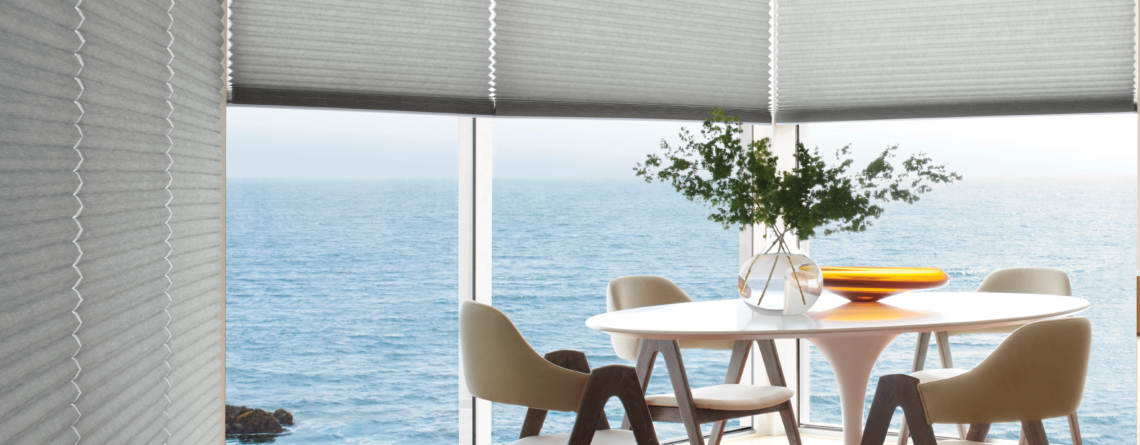
1. Sheer Shades for Soft, Natural Light
Sheer shades are a strong option for homeowners who want to enjoy daylight while softening the appearance of direct sunlight.
Hunter Douglas Silhouette® Sheer Shades combine fabric vanes with sheer panels to provide adjustable light control and different levels of privacy depending on the configuration. Their refined appearance can complement living rooms, dining areas, and other spaces where natural light is a priority.
Consider sheer shades for:
Living rooms with large windows
Dining rooms that benefit from filtered daylight
Spaces where maintaining an open, airy appearance is important
For homeowners comparing different light-filtering options, explore our sheer shades and Silhouette® window treatments.
2. Roman Shades for a Relaxed Coastal Look
Roman shades offer a fabric-based alternative for homeowners who prefer a softer, tailored appearance. Their folds create visual interest while allowing the fabric and color to complement furniture, wall finishes, and other interior details.
Hunter Douglas Vignette® Roman Shades are worth considering for living rooms, bedrooms, and other spaces where a refined fabric treatment fits the overall design.
When choosing Roman shades, consider the fabric, color, opacity, and how much light control the room requires. A lighter fabric can support an airy aesthetic, while a more opaque option may be better suited to rooms where additional light control is desired.
Explore Vignette® Roman Shades for more information.
3. Solar Shades for Bright Windows and Outdoor Views
Solar shades are designed to reduce incoming sunlight and glare while helping maintain a view through the window. They can be particularly useful in rooms with large windows or strong afternoon sun.
The openness of the fabric affects how much light and visibility pass through. A more open weave generally preserves more of the view, while a tighter weave typically provides greater glare reduction and daytime privacy.
Keep in mind that solar shades do not provide complete privacy at night when interior lights are on. Depending on the fabric and lighting conditions, an additional window covering may be needed.
Solar shades may work well for:
Large living room windows
Home offices with screen glare
Rooms facing strong afternoon sunlight
Spaces where maintaining an outdoor view is important
4. Plantation Shutters for Architectural Character
Plantation shutters offer a classic look that works well in coastal, traditional, and transitional interiors. Their adjustable louvers allow homeowners to direct incoming light while adding a defined architectural element to the window.
Shutters can be a good choice for bedrooms, living rooms, and street-facing windows where adjustable privacy is important.
When evaluating shutters for a coastal property, compare the available materials, finishes, installation requirements, and maintenance recommendations. The most suitable option will depend on the room and the home’s environmental exposure.
Explore our plantation shutters and custom shutter options to learn more.
5. Woven Wood Shades for Natural Texture
Woven wood shades introduce organic textures that pair naturally with coastal-inspired interiors. Their woven materials can complement wood furniture, linen upholstery, neutral palettes, and other natural finishes.
Hunter Douglas Provenance® Woven Wood Shades are an option for homeowners who want to add texture without relying on bold patterns or heavy visual details.
Consider woven shades in:
Living rooms with natural wood accents
Dining areas with relaxed furnishings
Bedrooms with layered, neutral finishes
Interiors that combine coastal and contemporary design
Depending on the selected material and construction, light may filter through the weave. Consider an appropriate liner if greater light control or privacy is needed.
6. Custom Blinds for Flexible Light Control
Custom blinds provide adjustable light control through tilting slats. They are a practical option for homeowners who want to change the direction of sunlight throughout the day.
Wood and faux wood blinds offer different appearances and maintenance considerations. Vertical blinds can also be worth exploring for certain large windows and sliding glass doors, depending on the desired operation and style.
When choosing blinds for a coastal home, consider the room’s moisture exposure, window dimensions, cleaning requirements, and overall interior design.
Custom sizing can help achieve a more tailored fit than standard off-the-shelf options.
How to Choose the Right Window Treatments for Each Room
The best solution may vary from one room to another. A consistent color palette can create a coordinated look throughout the home without requiring the same product on every window.
Room
Window Treatment Ideas
Main Consideration
Living room
Sheer shades, solar shades, Roman shades
Natural light, views, and glare
Bedroom
Roman shades, cellular shades, shutters
Privacy and desired darkness
Kitchen
Blinds or suitable easy-care shades
Cleaning and moisture exposure
Dining room
Sheer shades or Roman shades
Light and interior style
Home office
Solar shades or adjustable blinds
Screen glare and visibility
Sliding glass doors
Vertical blinds or suitable large-opening solutions
Easy operation and access
These are starting points rather than universal recommendations. Window size, orientation, existing decor, and personal preferences should all influence the final selection.
Can Coastal Window Treatments Help Manage Heat?
Window coverings can influence how much sunlight enters a room, which may help manage glare and solar heat gain. However, the results depend on the product, fabric, window orientation, glazing, and how the treatment is used.
Solar shades can reduce direct sunlight and glare. Cellular shades may provide an insulating layer at the window, while other shade types offer different combinations of light control and coverage.
For rooms that receive strong afternoon sun, consider discussing window orientation and performance requirements during the selection process rather than choosing a treatment based on appearance alone.
How to Coordinate Window Treatments Throughout a Coastal Home
A coordinated design does not require identical window coverings in every room. Instead, focus on a few shared elements.
Choose a consistent color palette. Neutral tones can connect different spaces while allowing furniture, flooring, and artwork to stand out.
Match the product to the room’s function. A living room may benefit from light-filtering shades, while a bedroom may require a more opaque treatment.
Consider large windows and sliding doors early. These openings can influence furniture placement, access, and the overall flow between indoor and outdoor areas.
Plan for motorization where useful.PowerView® Automation may be worth considering for hard-to-reach windows, multiple treatments, or rooms where convenient operation is a priority.
Evaluate the home as a whole. Reviewing adjacent rooms together can help maintain a consistent design while addressing different privacy and light-control needs.
Find the Right Window Treatments for Your Coastal Home
Start by identifying which rooms need more privacy, which windows receive the strongest sunlight, and where maintaining an outdoor view is most important. These details can help narrow the options before selecting fabrics, materials, and operating systems.
North County Blinds helps homeowners explore custom window treatment options for a range of interior styles and functional needs.
Ready to explore options for your home? Schedule an in-home consultation to discuss your windows, compare suitable products, and find a solution that complements your space.
What are the best window treatments for coastal homes?
The best option depends on the room, sunlight, privacy requirements, and interior style. Sheer shades, solar shades, Roman shades, woven shades, blinds, and plantation shutters are all worth considering for different applications.
Are solar shades a good choice for homes near the beach?
Solar shades can be useful for reducing glare and managing direct sunlight while maintaining an outdoor view. Fabric openness and lighting conditions affect visibility and privacy, so the right specification depends on the window and its surroundings.
Are plantation shutters suitable for coastal homes?
Plantation shutters can complement coastal interiors and provide adjustable light control. Choose a material and finish appropriate for the window’s exposure, and follow the manufacturer’s care recommendations.
Which window treatments work best for large windows?
Solar shades, sheer shades, and selected motorized solutions can be suitable for large windows. The best choice depends on dimensions, operating requirements, sunlight, and the desired appearance.
Can I use different window treatments throughout the same home?
Yes. You can combine different treatments while maintaining a coordinated look through consistent colors, complementary materials, and a shared design approach. Each room can have a different solution based on its functional needs.
 1. Sheer Shades for Soft, Natural Light
 1. Sheer Shades for Soft, Natural Light
 3. Solar Shades for Bright Windows and Outdoor Views


Leave a Reply